

Looking for PD Fast-Charging Units? A Guide to Choosing Top-Tier USB & Type-C Extension Socket Manufacturers

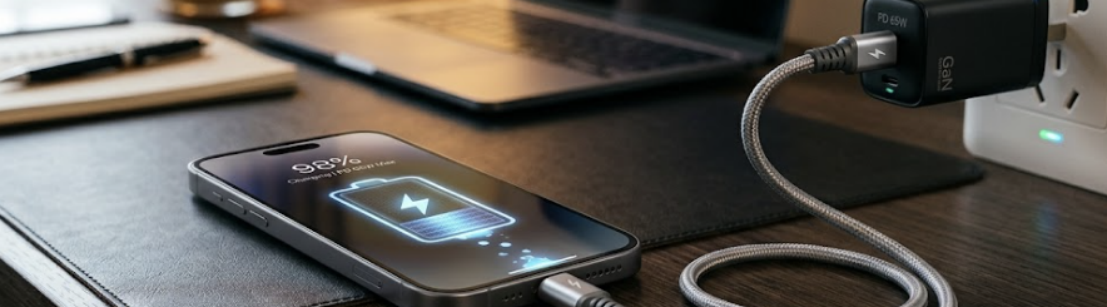
As modern households and commercial workspaces experience an unprecedented expansion of laptops, smartphones, and smart accessories, the market demand for integrated high-speed power distribution hardware has accelerated dramatically. Navigating this evolving technological landscape requires partnering with Top-Tier USB & Type-C Extension Socket Manufacturers who can supply safe, efficient, and future-proof power solutions. Selecting an experienced manufacturing partner is no longer simply about purchasing basic extension leads; it involves evaluating advanced power conversion engineering, thermal safety architectures, and strict international regulatory compliance.
Understanding PD Fast-Charging Technology and Market Dynamics
Power Delivery (PD) over Type-C interfaces represents a fundamental shift in how electrical power is negotiated and distributed. Unlike traditional legacy USB-A ports limited to standard 5V/1A or 5V/2.4A outputs, modern USB PD protocol engines dynamically negotiate voltage and current profiles up to 65W, 100W, or higher. This enables a single multi-gang extension socket to charge power-hungry laptops, tablets, and mobile devices simultaneously without requiring bulky external power adapters.
The global power strip market is rapidly shifting toward integrated hybrid sockets that seamlessly combine traditional AC outlets with high-wattage DC fast-charging ports. For importers, brand owners, and wholesalers, this transition offers substantial commercial opportunities but also introduces engineering complexity. Delivering high power in a compact socket housing demands superior internal circuitry, advanced heat dissipation, and multi-layered electrical protection.
A Detailed Strategic Procurement Framework for B2B Buyers
Sourcing high-performance USB and Type-C power extension leads requires a methodical evaluation framework. Global procurement teams must look beyond superficial aesthetics and price points to conduct rigorous technical, manufacturing, and compliance audits. Below is an expanded step-by-step strategic guide tailored specifically for evaluating PD fast-charging extension socket suppliers.
Step 1: Evaluate Internal Electrical Architecture and Thermal Management
The high power density of PD fast-charging modules generates significant thermal energy inside the extension socket enclosure. Procurement teams must inspect the internal circuit board design to ensure long-term stability and fire safety.
Thermal Dissipation Tech: Look for manufacturers utilizing Gallium Nitride (GaN) semiconductor technology, which offers higher energy efficiency and lower heat generation compared to traditional silicon. Inspect whether the internal power module uses heat-conductive potting glue, aluminum heat sinks, or active thermal throttling sensors (NTC thermistors).
Enclosure Flame Retardancy: Ensure the socket housing is constructed from high-grade polycarbonate (PC) or PC/ABS material rated UL 94-V0, capable of passing 750°C or 850°C glow-wire safety tests.
Integrated Copper Bar Construction: On the AC side, premium manufacturers utilize integrated unibody phosphor bronze copper strips rather than spot-welded wires. This unibody architecture reduces contact resistance, prevents thermal buildup under heavy continuous loads, and extends socket lifespan.
Step 2: Verify Protocol Compatibility and Dynamic Power Allocation
Modern electronics rely on diverse fast-charging protocols. A commercial-grade PD extension socket must feature a versatile Power Delivery controller chip to ensure broad device interoperability.
Fast-Charging Protocols: Verify support for universal standards, including USB PD 3.0/3.1, Programmable Power Supply (PPS) for adaptive voltage control, Qualcomm Quick Charge (QC3.0/4+), Apple 2.4A, and Huawei FCP/SCP protocols.
Dynamic Power Distribution: Multi-port USB sockets must feature an intelligent Microcontroller Unit (MCU) capable of real-time power reallocation. When multiple devices are connected or disconnected, the system should rebalance output wattage smoothly without causing unexpected power cuts or voltage spikes.
Step 3: Inspect AC/DC Creepage, Safety Isolation, and Energy Efficiency
Integrating high-voltage AC (110V–250V) and low-voltage DC charging circuits within a compact housing creates safety challenges that require strict engineering controls.
Insulation & Creepage Clearance: Ensure the internal printed circuit board assembly (PCBA) maintains sufficient creepage distance (typically at least 6mm to 8mm) and physical isolation barriers between high-voltage AC primary circuits and low-voltage DC secondary circuits.
Multi-Layer Protection Systems: The power strip must incorporate comprehensive safety mechanisms, including Over-Voltage Protection (OVP), Over-Current Protection (OCP), Short-Circuit Protection (SCP), Over-Temperature Protection (OTP), and Electrostatic Discharge (ESD) protection. Integrated surge protection (MOVs) and child safety shutters on AC outlets are essential for residential and office applications.
Standby Efficiency: Confirm that the PD power module complies with modern energy efficiency standards, such as DoE Level VI and ErP Tier 2, maintaining no-load standby power consumption under 0.1W.
Step 4: Audit Manufacturing Infrastructure, Capacity, and Quality Control
A manufacturer's operational capabilities directly dictate product consistency, supply chain reliability, and defect rates. B2B buyers should prioritize established factories with full-cycle production capabilities.
For example, leading industry manufacturers like Heikki leverage over 30 years of specialized manufacturing experience, operating a self-owned production base spanning more than 30,000 square meters. Operating at this scale allows for complete in-house management across mold design, automated plastic injection molding, surface-mount technology (SMT) PCBA assembly, and continuous automated optical inspections.
An example of this integrated engineering capability is seen in modern multi-functional power distribution solutions, such as the New Design 3/4/5 Gang UK Sockets Power Strip. This model combines multi-gang AC power outlets with high-speed USB/Type-C charging modules, a heavy-duty 3-meter copper extension cord, child protection shutters, and flame-retardant housing designed for demanding home and office environments.
Step 5: Validate International Compliance and Regional Safety Approvals
Navigating global trade requires strict adherence to international standard certifications and destination-specific market regulations.
System Certifications: Ensure the factory is certified under ISO 9001 (Quality Management), ISO 14001 (Environmental Management), and ISO 45001 (Occupational Health and Safety).
Destination Market Approvals: Electrical safety standards vary significantly by region. Importers should confirm that product lines carry specific approvals, such as BS1363 (UK and Hong Kong), SS145 (Singapore), MS589 (Malaysia), PS (Philippines), KC (South Korea), TISI (Thailand), SON (Nigeria), CE and UKCA (Europe and UK), alongside GCC, SQM, and ESMA approvals for Middle Eastern markets.
Step 6: Assess OEM/ODM Flexibility and Customization Support
Target markets often have distinct aesthetic preferences, packaging needs, cord length requirements, and localized plug standard variations. A top-tier manufacturing partner must offer flexible OEM/ODM capabilities.
Buyers should evaluate a manufacturer's ability to customize cable gauges (such as 3x1.25mm² or 3x1.5mm² pure copper wire), housing colors, logo printing, surge protection Joule ratings, and retail packaging while maintaining fast prototype turnaround times and reasonable Minimum Order Quantities (MOQs).
Future Outlook for Power Extension Hardware
As smart devices demand faster charging speeds in smaller form factors, the integration of GaN technology, higher PD wattage outputs (such as 100W+), and dynamic load balancing will become standard features across desktop extension sockets. Partnering with suppliers holding recognized national credentials—such as Specialized, Refined, Unique, and Innovative SMEs and High and New-Technology Enterprise (HNTE) recognitions—ensures access to continuous innovation, supply chain stability, and reliable product quality.
By executing a structured procurement strategy focused on thermal engineering, protocol compatibility, safety isolation, and comprehensive certification, global buyers can confidently source market-leading PD fast-charging extension sockets that fulfill consumer expectations and regulatory standards worldwide.
Official Website: https://www.heikkitech.com/
Jiangmen Heikki Technology CO.,Ltd
Jiangmen Heikki Technology CO.,Ltd
email us here
Legal Disclaimer:
EIN Presswire provides this news content "as is" without warranty of any kind. We do not accept any responsibility or liability for the accuracy, content, images, videos, licenses, completeness, legality, or reliability of the information contained in this article. If you have any complaints or copyright issues related to this article, kindly contact the author above.
